Black streaks on a roof are almost always colonies of Gloeocapsa magma, an airborne algae that feeds on the limestone filler in asphalt shingles. In Portland they spread fastest from November through April. The safe fix is a low-pressure soft wash that kills the algae at the root, followed by rain rinsing the stains away over a few weeks.
Why the streaks show up (or get worse) once the rain returns
Most homeowners notice the streaks in late fall. That timing isn’t a coincidence. Gloeocapsa needs steady moisture, mild temperatures and shade, and a Portland winter delivers all three for months at a time. When a roof stays damp from the first October storms until the dry stretch in early summer, the algae has a long, uninterrupted growing season.
The streaks themselves are the algae’s dark protective coating, which it produces to shield itself from UV light. As colonies grow, rainwater carries cells downslope, which is why the stains run in vertical lines from the ridge toward the gutters instead of appearing as random spots. Spores travel on wind and birds, so streaks often appear on several houses on the same street.
A few conditions make a Portland-metro roof especially vulnerable:
- North- and east-facing slopes. They get little winter sun and can stay wet for days after a storm.
- Heavy tree canopy. Douglas firs and big-leaf maples drop needles and leaves that hold moisture, and they shade the roof for most of the day.
- Low-pitch sections. Porch roofs and dormers drain slowly, giving algae more time to take hold.
- Older shingles without algae-resistant granules. Many roofs installed before the mid-2000s lack the copper-coated granules newer products include.
Algae, moss or something else? A quick way to tell
It’s worth knowing what you’re looking at before you decide what to do. Black algae is flat and stains the surface; you can’t pick it off with your fingers. Moss is green, three-dimensional and spongy, and it usually starts in the gaps between shingles. Lichen forms crusty gray-green circles that grip the granules tightly. On many Portland roofs you’ll find all three at once, with algae streaks on the open field of the roof and moss clustered along the shaded edges and the keyways.
Occasionally dark staining has a different cause, such as soot near a chimney or granule loss on a worn-out roof. If the dark areas feel bald or gritty and you see granules piling up in your gutters, the shingles may be near the end of their life, and cleaning won’t change that. An honest roof cleaner will tell you so.
Does black algae actually harm the roof?
Algae on its own is mostly a cosmetic problem, but it isn’t harmless. Darker shingles absorb more heat in summer, and the algae holds a thin film of moisture that gives moss spores a perfect place to settle. In our experience, a roof that’s heavily streaked this winter tends to have noticeable moss within a season or two, and moss is the growth that lifts shingles and lets water get underneath. You can read more about that progression in our guide to preventing roof moss in the Pacific Northwest.
How to remove black streaks without damaging shingles
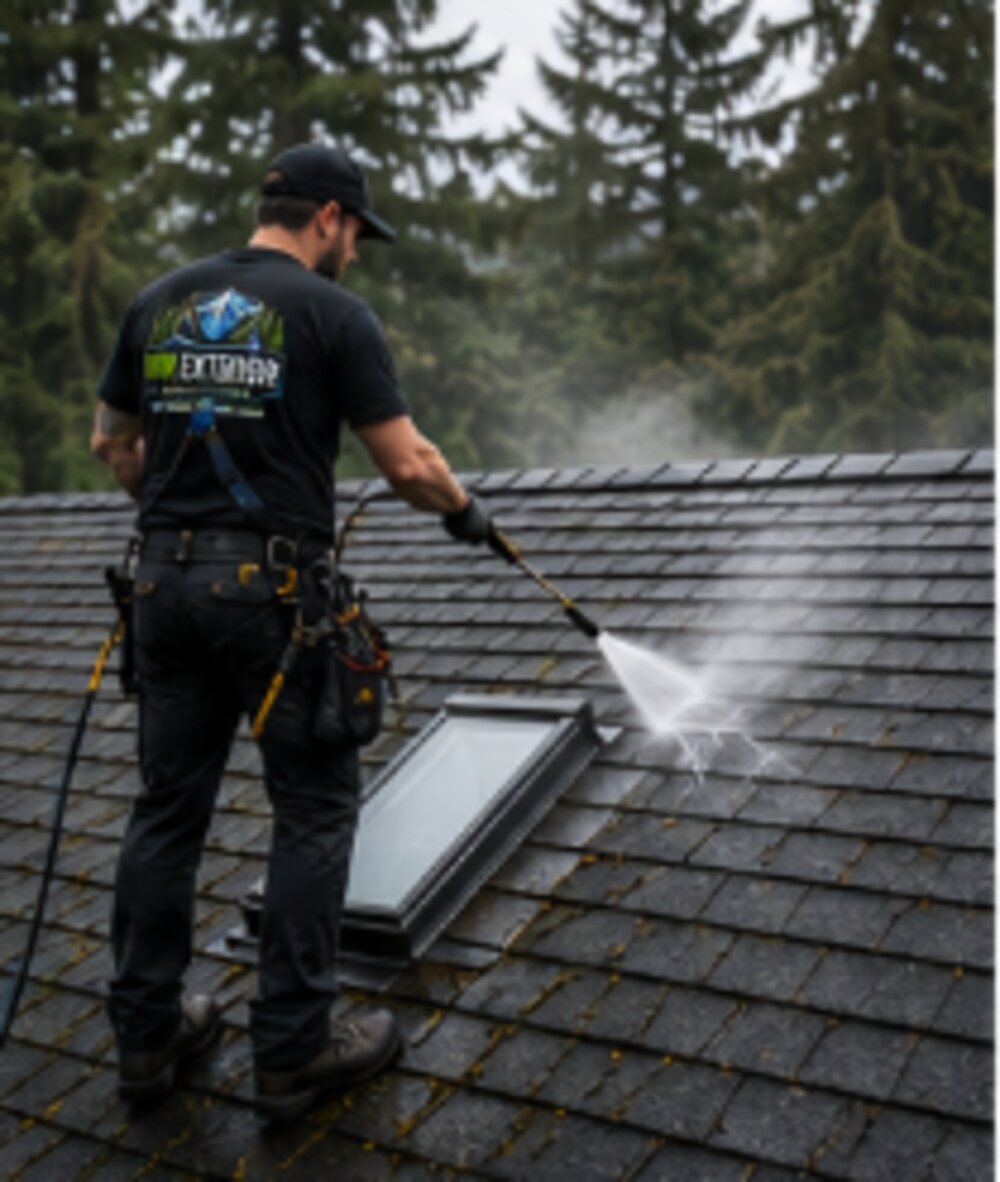
The single most important rule: never pressure wash an asphalt roof. High pressure blasts away the protective granules, can void the manufacturer’s warranty, and forces water up under the shingle laps. Scrubbing with a stiff brush causes the same kind of wear more slowly.
The method roofing manufacturers recommend is a soft wash. Here’s how we approach it on Portland-area homes:
- Inspect first. We check for loose shingles, flashing problems and heavy moss before anything is applied.
- Protect the landscaping. Plants below the drip line get pre-wet and covered where needed, and downspouts are managed so runoff doesn’t pool in garden beds.
- Apply a low-pressure, biodegradable cleaning solution. It soaks into the algae and kills it at the root instead of simply bleaching the surface.
- Let the weather finish the job. Some staining lifts the same day; the rest fades over the following weeks as Portland’s rain rinses away the dead algae. That gentle rinse is part of what makes soft washing so effective here.
Winter soft washing is completely workable in the Portland metro as long as we pick a window with a few dry hours after application. Treating the roof now also stops the algae before its heaviest growth months.
Should you try it yourself?
We understand the temptation, but a wet, algae-coated roof is extremely slick, especially on a cold morning, and mixing cleaning solutions at the wrong strength can burn plants or discolor siding. On anything taller than a gentle single-story roof, it’s worth calling an insured crew with proper fall protection.
Keeping the streaks from coming back
A thorough soft wash usually keeps a roof clean for a few years, and you can stretch that time with simple habits:
- Trim branches back so the roof gets more sun and airflow.
- Keep gutters clear so water drains off rather than backing up under the lower courses.
- Blow off needles and leaves after big fall windstorms.
- Consider zinc or copper strips near the ridge, which release trace metals with each rain that discourage regrowth.
- Schedule a light maintenance treatment every two to three years on shaded, north-facing roofs.
Our crews have soft washed roofs all over the city, from the tree-lined streets of Southwest to the older bungalows in Northeast. If you’re a local homeowner, see what we offer on our Portland roof and exterior cleaning page, or get a free quote and claim 30% off your first wash.
Get a free instant quote for a safe roof soft wash — 30% off your first wash.
Claim My 30% Off