
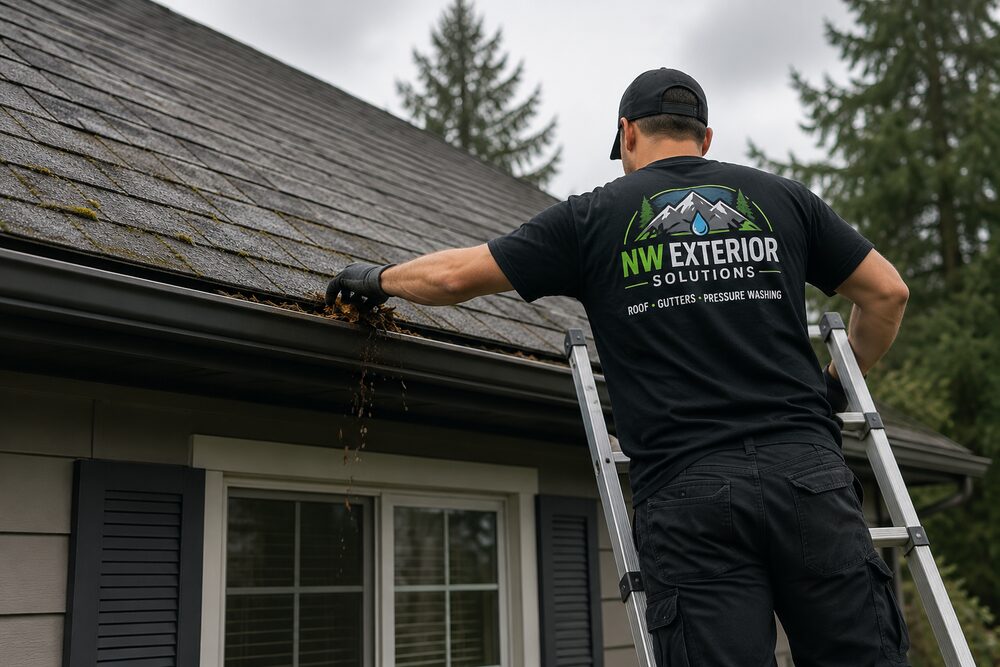
Fall roof and gutter prep in the Pacific Northwest comes down to three things: clearing the gutters and downspouts, getting moss and needle litter off the roof, and confirming the water has somewhere to go once it lands. Do it while the roof is still dry and you avoid the overflows, backed-up valleys and slow leaks that show up in December.
Why fall prep matters more here than almost anywhere
Portland doesn’t get the heaviest rainfall in the country. It gets the most persistent. From October through April the roof rarely dries out completely, and that is a very different kind of stress than a few big storms. Add the Douglas fir and big-leaf maple canopy sitting over half the neighborhoods in the metro and you have the perfect setup: needles and leaf litter pack a gutter solid in about six weeks, then moss uses the constant moisture to establish itself on the north-facing slope. By February the water that should be moving through a downspout is running down your siding and pooling against the foundation instead. Everything you do in the fall is about getting ahead of that cycle before it starts.
The Pacific Northwest fall checklist
1. Gutters and downspouts — timed right
Timing is most of the job. Clean in early September and the maples haven’t finished dropping, so you will be back on the ladder in six weeks. In the Portland metro the sweet spot is usually mid- to late October: after the bulk of leaf fall, before the sustained rain settles in. Homes under conifers are the exception, since fir and cedar shed year-round and those gutters often need two visits. This is also the single most-skipped maintenance item we see, and it is worth understanding why gutter cleaning matters more in Portland’s rainy climate than it does in a drier market.
- Scoop debris out of the trough rather than blowing it toward the downspout
- Flush each run with water and watch that it actually drains
- Check the downspout elbows — a clog there is common and invisible from the ground
- Look for separated seams, loose hangers and sagging sections holding standing water
- Confirm extensions carry water four to six feet away from the foundation
2. Moss and debris on the roof
Fall is the last comfortable window to deal with roof moss before its growth season. Moss does not go dormant here in winter — cool, wet, shaded conditions are exactly what it wants, so a light green haze in October is a thick mat by March. A soft wash in early fall removes what is there, and a follow-up treatment keeps regrowth suppressed through the wet months.
Use low pressure, always. High pressure strips the protective granules off composition shingles and drives water up under the courses, which is how a cosmetic problem turns into a roofing bill. Low pressure plus a biodegradable solution is the method roofing manufacturers actually recommend. While you are up there, clear the needle mats that collect in valleys and behind chimneys — those hold moisture against the shingles all winter and are where most nuisance leaks begin.
3. Ground-level drainage
A perfectly clean gutter does not help if the water dumps next to your foundation. After the first real rain, walk the perimeter and look for splash marks on the siding, eroded bark dust, standing water within a few feet of the house, and crawl-space vents low enough to take on water. Portland-area clay soils drain slowly, so a small grading problem becomes a crawl-space problem faster than most homeowners expect.
What is worth doing yourself — and what isn’t
Single-story home, reachable gutters, a stable ladder and someone spotting you? Cleaning your own gutters is reasonable. Anything that involves walking on a wet roof is not. PNW roofs in the fall are genuinely slick; moss and algae can make a moderate pitch behave like ice, and shingles take damage from foot traffic even when nothing goes wrong. Roof work, two-story gutters and any moss treatment are worth handing to someone insured and equipped for it. Soft-wash solutions also need correct dilution and plant protection, which is easy to get wrong with a garden sprayer.
One visit, before the rain sets in
Most homes we service in the fall get the gutters, the roof and a quick drainage check handled in a single appointment — from inner Portland bungalows to newer builds out in Oregon City, where the tree cover and clay soil make drainage especially unforgiving. Booking in September or early October also means you are not competing with everyone who waits for the first clogged downspout.
Want an exact number for your home? Get a free instant quote — and right now you can take 30% off your first service.
Get a free instant quote on fall roof & gutter prep — 30% off your first service.
Claim My 30% Off