
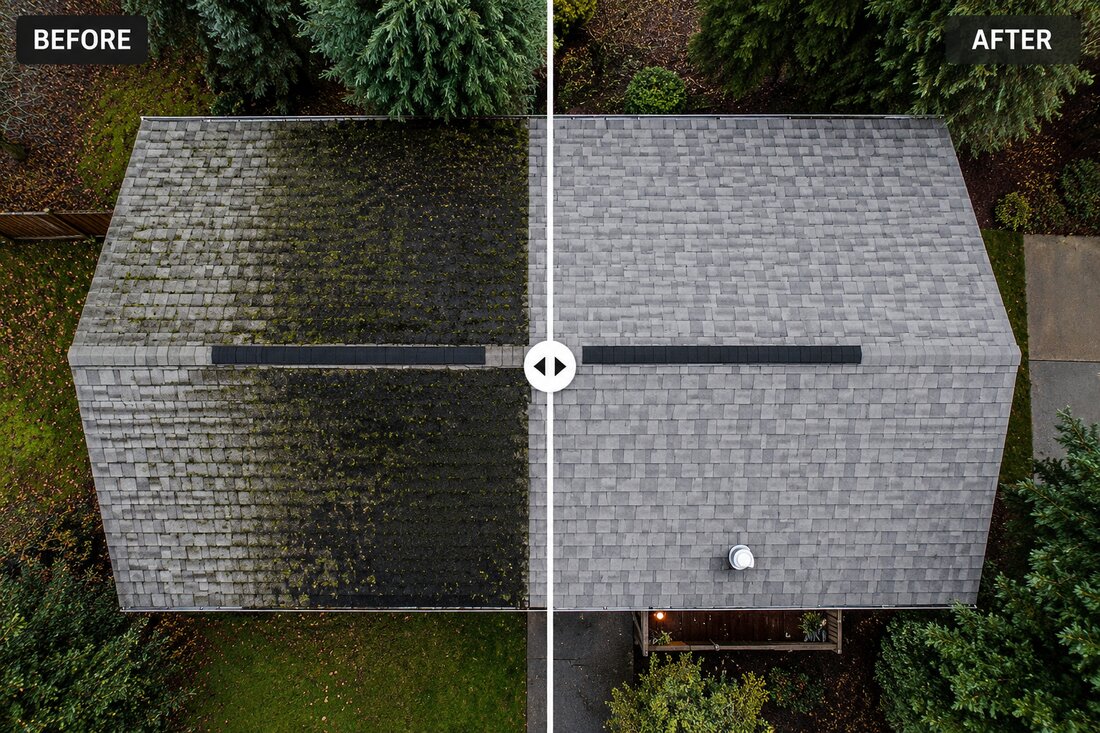
A gray, blotchy fence in the Portland area is usually not rotten — it is coated in algae, mildew and a thin layer of oxidized wood fiber. Professional fence cleaning uses low pressure and a wood-safe solution to lift that layer off, bringing back the original cedar tone in an afternoon for a small fraction of replacement cost.
Why fences gray out so fast west of the Cascades
We get roughly eight months of damp every year, and a fence catches all of it. The north and east faces stay shaded and wet long after the rest of the yard dries out, so green algae and black mildew colonize the boards first on those sides. Meanwhile UV breaks down lignin — the natural glue in wood — on the sun-facing side, and rain rinses the loosened fibers away. The result is the classic Portland fence: silver-gray on one face, dark green-black on the other, and nobody remembers what color it started as.
Cedar, our most common fencing material here, weathers especially visibly. It starts warm reddish-brown and turns driftwood gray in as little as two seasons if it was never sealed. Pressure-treated pine goes gray more slowly but picks up mildew more stubbornly, particularly where a fence line runs under a big-leaf maple or Douglas fir canopy.
What is actually on your fence
Homeowners tend to lump it all together as "dirt." It usually isn't. A typical Portland-metro fence carries some mix of:
- Green algae — the slick film on shaded, ground-level boards, fed by sprinkler overspray and splash-back.
- Black mildew and mold — the dark speckling that looks like stain but wipes to a smear.
- Lichen — crusty gray-green patches on older, untreated boards; the hardest to remove.
- Tannin bleed — dark rust-colored streaks below nails and knots, common on cedar.
- Surface oxidation — the dead gray fiber layer that makes new stain refuse to soak in.
Each of those responds to a different part of the cleaning process, which is exactly why "just rent a pressure washer" so often disappoints.
Why blasting a fence is the wrong move
Fence boards are thin — usually 5/8 inch of cedar. A consumer pressure washer at 2,500 PSI will strip the soft spring growth out from between the harder grain lines and leave a permanently furry, corduroy-textured surface. That fuzz then holds moisture and dirt better than the original board did, so the fence looks worse a year later than it did before the wash. On top of that, high pressure drives water into the end grain and into post bases, and it will happily chew through the wood around the fasteners.
The professional approach is the opposite. We apply a biodegradable cleaner that kills the organic growth and releases the tannins chemically, give it dwell time, then rinse at low pressure — closer to a garden hose than a pressure washer. The chemistry does the work; the water only carries it away. It is the same soft-wash logic we apply to roofs and siding, and it is why timing matters: see our guide to the best time of year to pressure wash in Portland before you book.
What about wood brighteners?
After the cleaner comes off, a mild oxalic-acid brightener neutralizes the surface and pulls out iron stains and tannin streaks. This step is what takes a fence from "clean but dull" to genuinely restored, and it is the one most DIY jobs skip. It also opens the wood pores back up so a stain or sealer will actually penetrate.
Clean first, then seal
If you plan to stain or seal — and in this climate you should, roughly every two to three years — the cleaning is not optional prep, it is the whole foundation. Sealing over algae traps it under the finish, where it keeps growing and shows through as dark shadows within a season. Let the fence dry two to three days after cleaning before any finish goes on, and check the forecast: we would rather push a staining date than seal in Willamette Valley moisture.
Homeowners in Newberg and the surrounding wine-country neighborhoods ask about this constantly, because so many fence lines out there sit alongside open fields and mature trees — a lot of shade, a lot of organic debris, and fences that go from new to gray fast.
When cleaning won't save it
Be honest about the structure. If posts wobble at the base, if you can push a screwdriver into the wood at ground level, or if boards are cupped and cracked through, cleaning will only make the damage more visible. Cleaning restores color and removes growth; it does not restore rotted wood. The good news is that in our experience most fences homeowners have written off are structurally fine and simply filthy.
Not sure which side of that line yours falls on? Get a free on-site quote — we will tell you honestly, and right now you can take 30% off your first service.
Get a free instant quote — 30% off your first wash.
Claim My 30% Off