In the Portland metro, the best time to stop roof moss is right now — mid-September through October, before the steady rain sets in. The spores are already sitting on your shingles; all they need is sustained moisture. Clearing and treating a dry roof in early fall prevents an entire winter of growth.
Why September is the starting gun for moss here
Our summers are genuinely dry. By late August the moss on most Portland-area roofs has gone crisp and brown, and homeowners reasonably assume it died off. It didn’t. Moss goes dormant, holds on in the seams between shingles, and springs back within days of the first real rain — usually the last week of September or the first half of October.
What follows is close to perfect growing weather: seven or eight months of frequent rain with daytime temperatures mostly in the 40s and 50s. That combination is far better for moss than the freeze-and-bake cycles most of the country gets, which is exactly why PNW roofs grow it so aggressively while roofs in Denver or Phoenix don’t.
Where it shows up first
- North-facing slopes — they get the least direct sun and stay damp longest, so they are almost always the first side to green up.
- Under tree canopy — Douglas fir, cedar and big-leaf maple drop needles and leaf grit that hold water and give moss something to root into. Older neighborhoods with mature trees, from Southeast Portland to Gresham, see this constantly.
- Valleys and behind chimneys — anywhere debris collects and water slows down.
- Lower courses and the bottom third of the roof — runoff keeps them wet the longest after a storm.
- Older composition shingles — once granules wear off, the surface gets rough and porous, which is all the foothold moss needs.
What a pre-rain roof plan actually looks like
A useful fall visit is more than spraying something on and leaving. In practical order:
- Clear the debris first. Needles and leaf litter in valleys and behind penetrations are the moss nursery. Removing them matters as much as the cleaning itself.
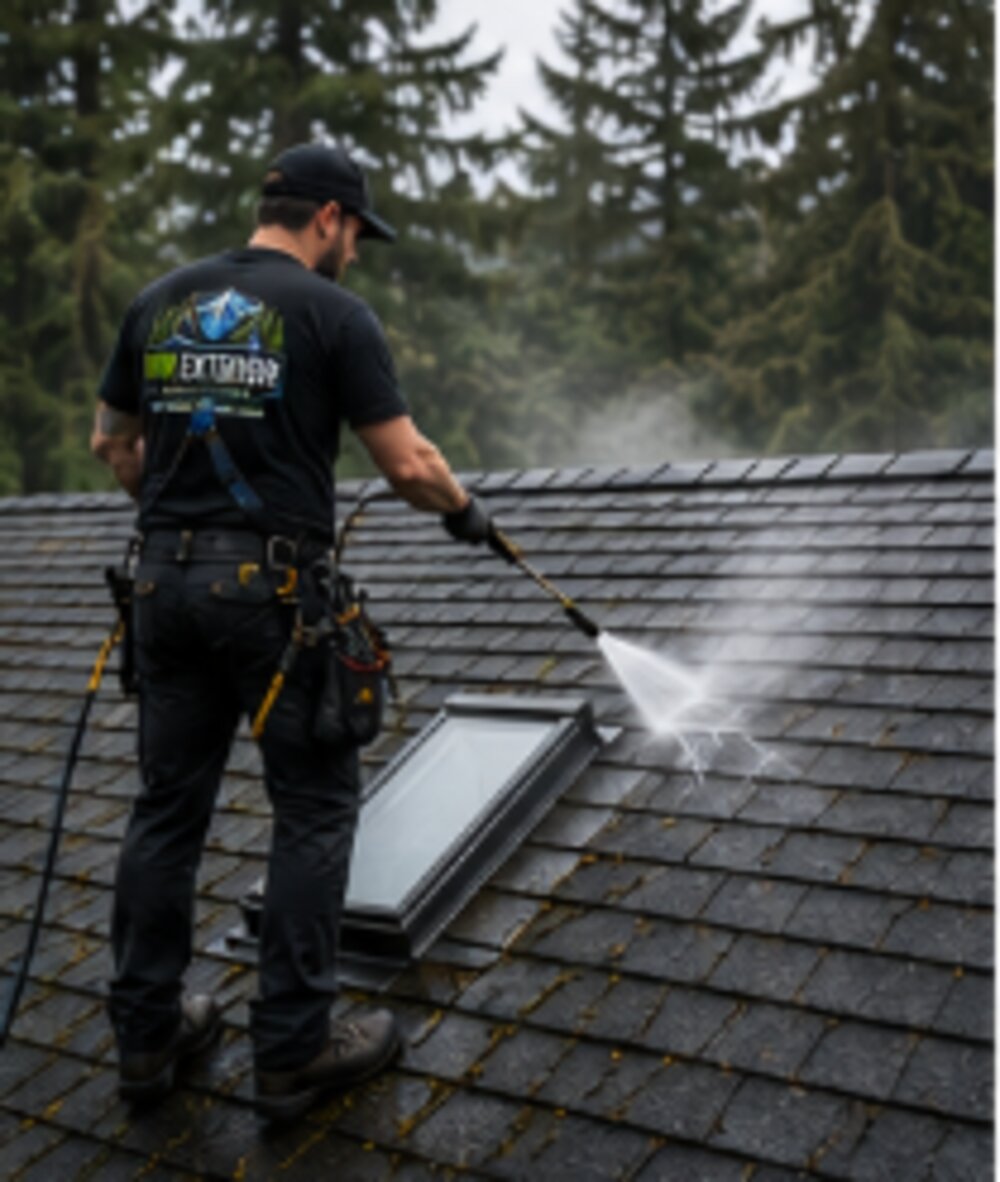
- Soft wash the roof. Low pressure plus a biodegradable cleaner kills moss and roof algae at the root and rinses it away without touching the shingle.
- Apply a preventative treatment. A residual moss inhibitor is what buys you a clean winter rather than three clean weeks.
- Clear gutters and check the downspouts. Water that backs up over the fascia keeps the roof edge permanently wet.
- Trim overhanging limbs where you safely can. More light and airflow on a roof does more long-term good than any product.
Never scrape it and never pressure wash it
Two shortcuts cause most of the roof damage we’re called out to look at. Scraping or wire-brushing moss tears up granules and lifts shingle edges, and moss roots survive anyway. Pressure washing a roof is worse: high pressure strips the granule layer that protects the asphalt, drives water under the courses, and can void a manufacturer’s warranty. Soft washing costs about the same and is the method roofing manufacturers actually recommend. If you’re weighing a one-time clean against an ongoing plan, our breakdown of moss removal vs. moss treatment covers the difference.
Booking before the weather closes the window
Soft washing needs a reasonably dry roof and a few dry hours afterward for the treatment to work properly. In September and October those windows are still easy to find. By mid-November, a week can pass without one, and every roof in the metro that has gone green wants the same slot. Waiting until January usually means paying to remove a full season of thick, established moss rather than preventing it — and thick moss is what lifts shingles and causes leaks.
How often after that?
Most Portland-area homes do well on a clean every one to two years, with a treatment in between. Heavily shaded lots under conifers often need it annually. A sunny, open roof with little tree cover can stretch longer. Rather than following a fixed schedule, look at your north slope in early fall: if you can see green fuzz in the shingle seams, it’s time.
Not sure which category your roof falls into? Get a free quote — we’ll tell you honestly whether you need a full wash now or just a treatment, and right now you can take 30% off your first service.
Free on-site estimate — 30% off your first soft wash.
Claim My 30% Off